
Winter War
Girl in Beret by Helene Schjerfbeck, 1935

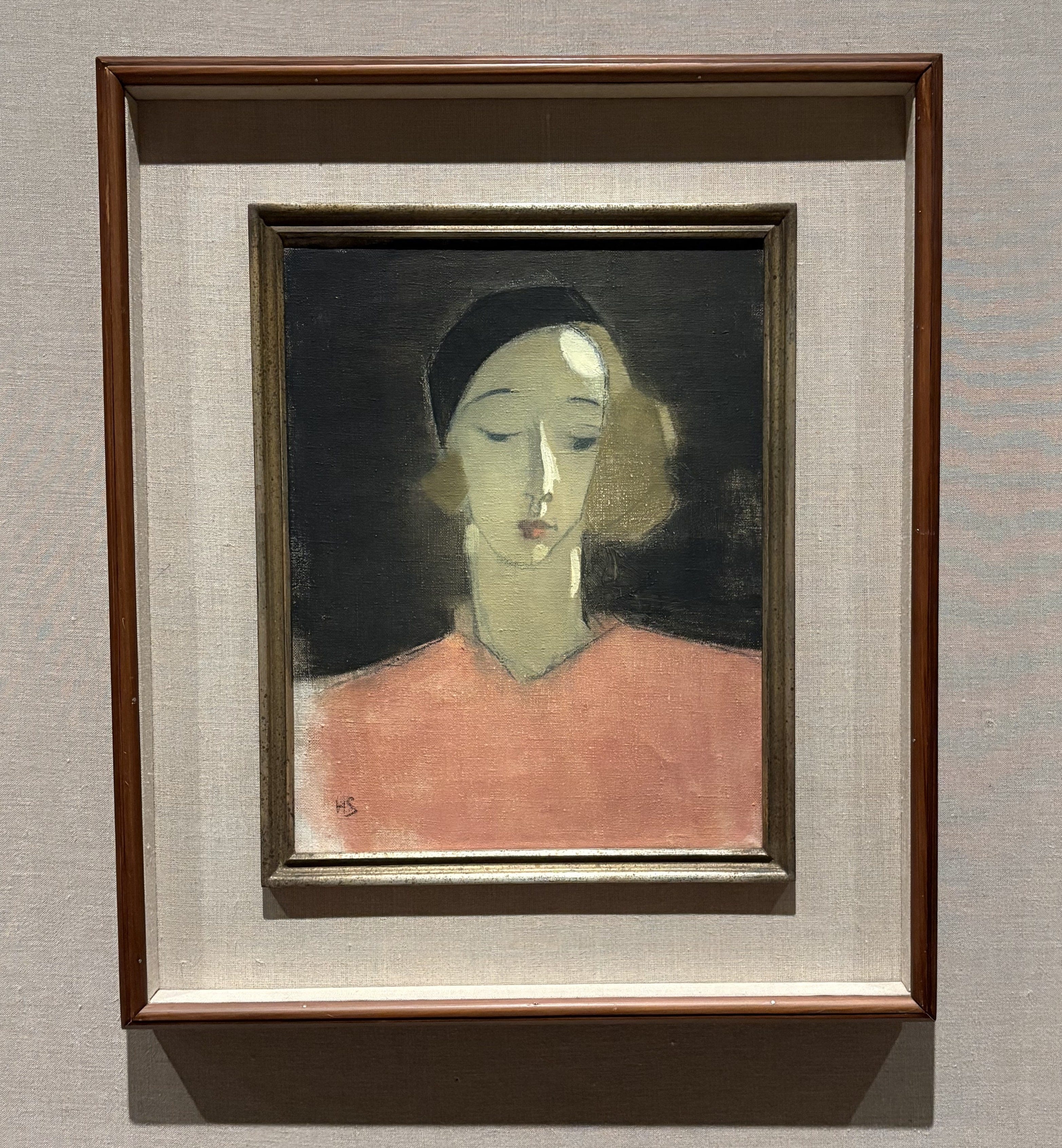
Finland has a special hold on my creative life. In 2019 I spent a month at Arteles Creative Center, revising my first novel, developing a collage poetry practice and unplugging from the outside world. Daily yoga and meditation, long walks in the woods and being surrounded by other creative people from around the world recalibrated me as an artist. I watched winter turn to spring. I developed a love of saunas and cardamom buns. When I returned to Finland in the summer of 2024, I experienced Helsinki as a tourist and swam in the Baltic Sea.
Last weekend before the storm, N and I did date night at the Met. After exploring the Man Ray exhibit together, we made our way down to Seeing Silence: The Paintings of Helene Schjerfbeck. Born in 1862, Schjerfbeck lived in Finland for most of her life, though she also spent time in Paris in her 20s and spent her last years in Sweden. Her paintings range from realist depictions of historical events to abstract self-portraits. At 40, she moved to rural Hyvinkää to care for her mother. In her 50s, an unrequited love for a man 20 years her junior inspired her work. Throughout this time, she continued to paint, often asking her models to look away from her and be silent when she painted them.1 Schjerfbeck died in 1946 in Sweden at 83. I had never seen Schjerfbeck’s work before and was delighted and haunted by what I saw. So much so that I returned to the Met a couple days later to revisit the paintings and take more time to sit with them.
For this week’s post, I chose Girl in Beret as inspiration, but I may use other Schjerfbeck paintings in subsequent weeks to share more of her work with you.
When Schjerfbeck was born, Finland was an autonomous state within the Russian Empire and experiencing a surge in Finnish nationalism to counteract Russian and Swedish influences. Famine struck Finland from 1866-1868 and Schjerfbeck’s father died of tuberculosis when she was 13. In 1892, Finnish became a second official language (second to Swedish). In 1917, Finland gained independence from Russia and fought two wars against the Soviet Union during the Second World War, maintaining their independence and agreeing to a weapons deal with Nazi Germany in 1940. When Schjerfbeck died in 1946, Finland was the only bordering country of the USSR to maintain its independence after the war. Her life and career span a particularly eventful 80+ years in her home country and it’s reflected in the breadth of her work.
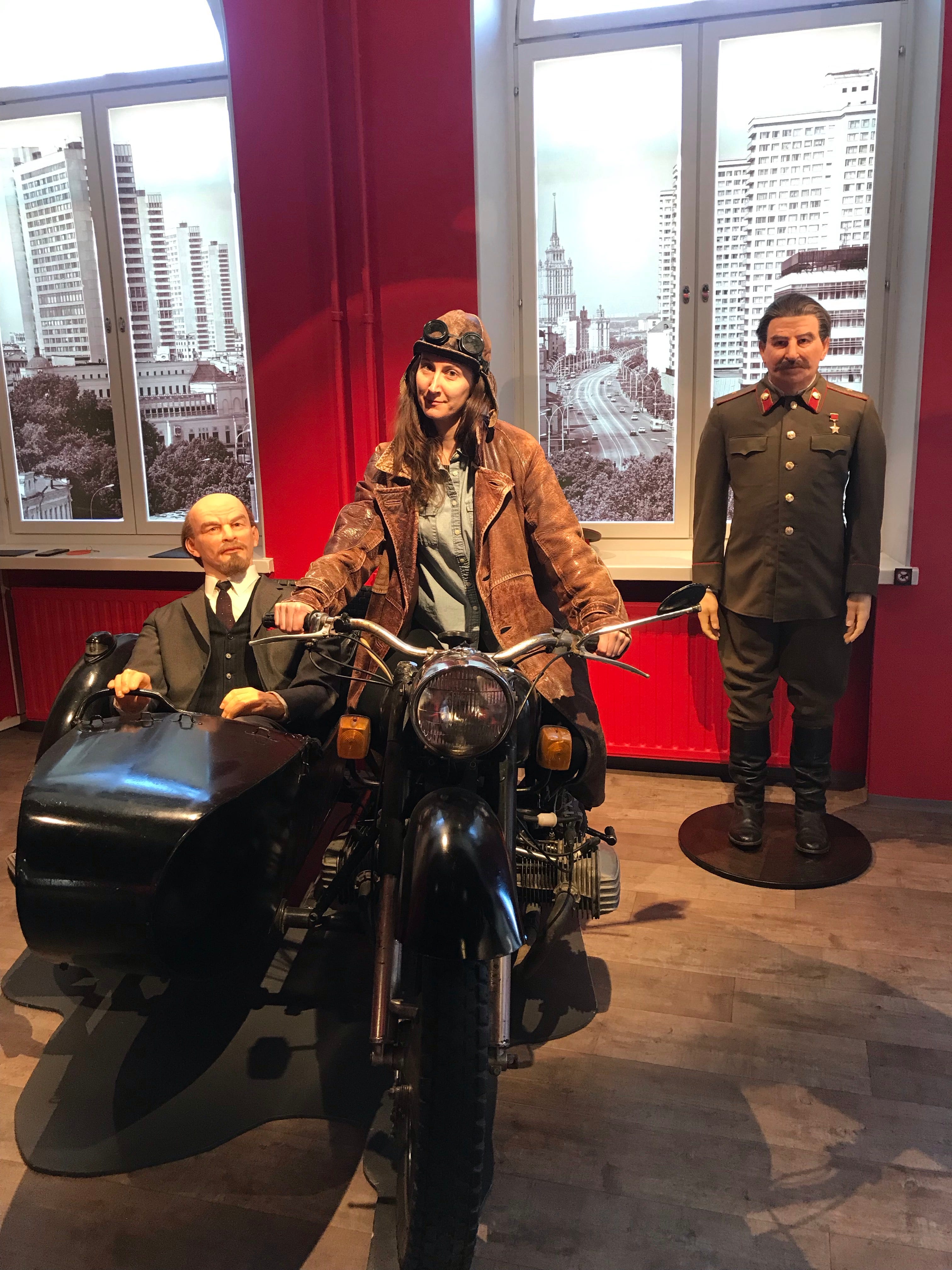
Back in 2019, during a weekend with friends in Tampere, I went to what was then the Lenin Museum, a fascinating exploration of the relationship between Finland and Russia. I even got a fun picture of myself on a motorcycle with Lenin in the side car. The museum has since rebranded to reflect Finland’s membership in NATO and alliance with Europe in the wake of Russia’s war with Ukraine.
As the world order continues to shift in the 21st century, Schjerfbeck’s work is a reminder of what an artist sees and feels as borders and politics change.
“Take it,” Max said. “I don’t want it anymore.”

Helene had wanted the magazine from Paris, but now that Max didn’t want it anymore, she was less tempted by his cast-offs. She thought of the mouse trying to climb up the snow bank that she had seen on her walk home from the gym the night before and felt like she was the mouse and Max was the snow bank. She had smiled at the tiny mouse, it was cute and tenacious. But then she wondered where it had come from and where it was going and whether it would freeze to death before it found shelter. When she had returned to her apartment, she poured herself a large glass of red wine and heated up the leftover brisket that she had made in her slow cooker the day before. The city was covered with more inches of snow than she had seen in years. She had watched one episode of the gay hockey show everyone else had already seen and gone to bed. She had dreamt of bric-a-brac shops and the hill she grew up on. Too many people piling into a taxi to avoid a long walk to the nearest subway station. Chance encounters with long-lost friends.

Today Max had arrived, delayed a day by the snow. He had kissed her when she opened the door, his lips cold. The temperature would be below freezing for at least another week and Helene had woken up happy that Max would be back, someone to warm her bed at night and make her extra strong coffee in the morning. But now she was less sure. Something about the cold kiss and the cast-off magazine gave her pause. He hadn’t complained about the extra night in Paris. But it was Paris. Would she have complained if it had been her cancelled flight?

Helene looked at the model on the cover of the magazine, her long face, her downcast eyes. She wanted to tear the cover off the magazine and tape it up in her studio. She wanted to study the woman’s face. She wanted to make hundreds of versions of this woman, trying again and again to get the proportions right and then get them wrong intentionally. Her studio was full of magazines like this. Of potential inspiration laying dormant while she scrolled on her phone and did New York Times games. While she read about the latest person killed by federal agents, holding back tears while she thought about what she was doing with her life and why she wasn’t sacrificing herself to the cause. Any cause.

She told herself it was the grief. And then she told herself that it would be a good salve for the grief. And then the algorithm recalibrated and she saw posts about how to handle her grief through action. Any action.

She offered Max a glass of wine from the bottle she had opened the night before and he accepted. She poured one for herself too and then took a block of cheese out of the fridge. Trader Joe’s had been a war zone on Saturday afternoon when she had gone to get blizzard supplies, but she had managed to find everything she needed, including Max’s favorite cheese. And then she had learned his flight was cancelled and she was proud of the self-restraint she had had in not opening it until his return. She arranged crackers and cheese on a plate and immediately regretted not getting a baguette. Why would he want Trader Joe’s cheese and crackers when he had just been in Paris? She watched him as he cut a large crumbling slice of cheese and ate it sans cracker. Next time, baguette.

“What else did you bring me?” Helene asked, sure that the answer was going to be disappointing.

“This,” he said, taking a small bag out of his black backpack. He offered it to her with a smile she hadn’t seen yet since he’d walked through the door.

“What is it?” she asked.

“Open it, silly,” Max said as Helene peered into the bag and pulled out a black woolen beret.

“Oh my god.”

“What?” Max asked, unsure of her tone and equally unsure of his gift.

“A beret?” Helene asked.

“Yeah, there was a little shop near my hotel. I thought you’d look cute in a beret.”

“Me?”

“Yeah, you.”

“A beret?”

“You hate it,” Max said, frowning.

“I don’t hate it.”

“You don’t like it,” he said.

“Let me see,” Helene said, getting up and walking over to the mirror near the door. She put the beret on and turned to Max.

“It’s cute!” Max said.

“Where will I wear it?” she said.

“Wherever you want,” Max responded. “You hate it.”

“I don’t hate it.”

“You said that, but I don’t believe you,” Max said, starting to wish that he hadn’t brought anything back from Paris for Helene.

Helene turned to the mirror and examined herself, adjusting the beret. She would need shorter hair to pull this off, she thought. She would need a new, pinker lipstick. She would need different earrings. Perhaps a turtleneck. It certainly didn’t go with the 20 year old Barnard sweatshirt she was wearing. She hadn’t dressed up for Max’s return. She also hadn’t washed her hair or shaved her legs. It had been too cold for that level of wetness.

The beret felt like an invitation to become a new woman. What she didn’t know was whether Max knew this when he bought it. Or he had just picked up a beret in Paris because it was a beret in Paris.

“It just…” Helene knew she had to say it even though she didn’t want to.

“What?” Max asked slowly with an upward intonation that meant he knew he wouldn’t like what she was going to say.

“This feels like a present for a different me. A me you want me to be. Not the me that I am,” Helene said, still looking at herself in the mirror, still wearing the beret.

“Helene, it’s a beret! You’re an artist. I was in Paris. I just. It’s so silly and…” Max stopped himself. “I’m so sorry.”

He wrapped his arms around her so they could both see each other in the mirror. Max kissed her cheek, no longer cold, warmed by the red wine.

“I saw it and I laughed. I imagined you in your painting smock and the beret and I smiled. And then I bought it. That’s all.”

“You don’t think I need to cut my hair?” Helene asked.

“What?”

“Or start wearing pink lipstick?”

“No,” Max said, kissing her on the cheek again.

“Girls like me don’t wear berets,” Helene said, still scrutinizing herself in the mirror. “Berets are for…” she sought out the magazine with the long-faced woman, “women like that.”

“French women?” Max asked.

“Beautiful, cool women,” Helene responded.

“But isn’t that what you are?” Max asked.

“No, I’m a depressed, unappreciative hag.” Helene said, laughing at first and then finding herself crying, tears streaming down her face. “No, no, no, I wasn’t going to cry tonight. I told myself I wasn’t going to cry.”

“It’s ok, you can cry,” Max said, spinning her around so she could cry into his shoulder. “I’m sorry my flight was cancelled. I’m sorry you were alone all day. I know it was a hard day for you to be alone.”

Helene’s tears choked her response, so she continued to cry on Max’s shoulder as he rubbed her back.

Later that night, when Max’s jetlag hit and she was still awake, still crying, Helene thought back to that mouse. She imagined it climbing up and over the snow bank only to find a whole avenue to cross after the snow bank. “It just feels like everything is too hard right now,” she whispered, knowing Max wouldn’t hear her.

Then she got out of bed as noiselessly as possible, carefully peeled the cover from the magazine, and walked into her studio. She saw the beret hanging on the same hook as her smock--Max must have put it there while he was cleaning up after dinner. She smiled and put it on and began to sketch.
This strikes me as extremely Finnish behavior and reminds me of my favorite joke about Finns and their dislike for eye contact.